You can spend a fortune on a sofa, a rug, and a perfectly proportioned coffee table — and if the lighting in the room is wrong, none of it will read. Lighting is, in our experience, half of what makes a room feel finished. Here's how we approach it.
Start with the natural light
Before specifying a single fixture, we spend a day in the house. We watch how the morning light hits the kitchen, how the afternoon sun stretches across the living room floor, how the windows feel at dusk in November. The artificial light is there to support the natural light — never to compete with it.
Three sources, every room
Our rule of thumb: every room gets at least three light sources, on at least two switches, and at least one of them is dimmable. Overhead for general illumination. Lamps for warmth and intimacy. A third source — a sconce, a picture light, a candle — to give the eye somewhere to land.
Color temperature matters
One of the most common problems we walk into is mismatched color temperature. The kitchen is at 4000K, the dining room is at 2700K, the hallway is somewhere in between. We standardize the entire house at 2700K (sometimes 3000K in a kitchen) and the home immediately feels more cohesive.
Dim everything
Every overhead light we specify is on a dimmer. Every lamp gets a low-wattage bulb. By 6 pm, the entire downstairs of a well-lit home should be running at about 30% of its maximum output. That's the level at which a room actually feels like the place you want to be.
Don't forget the lamps
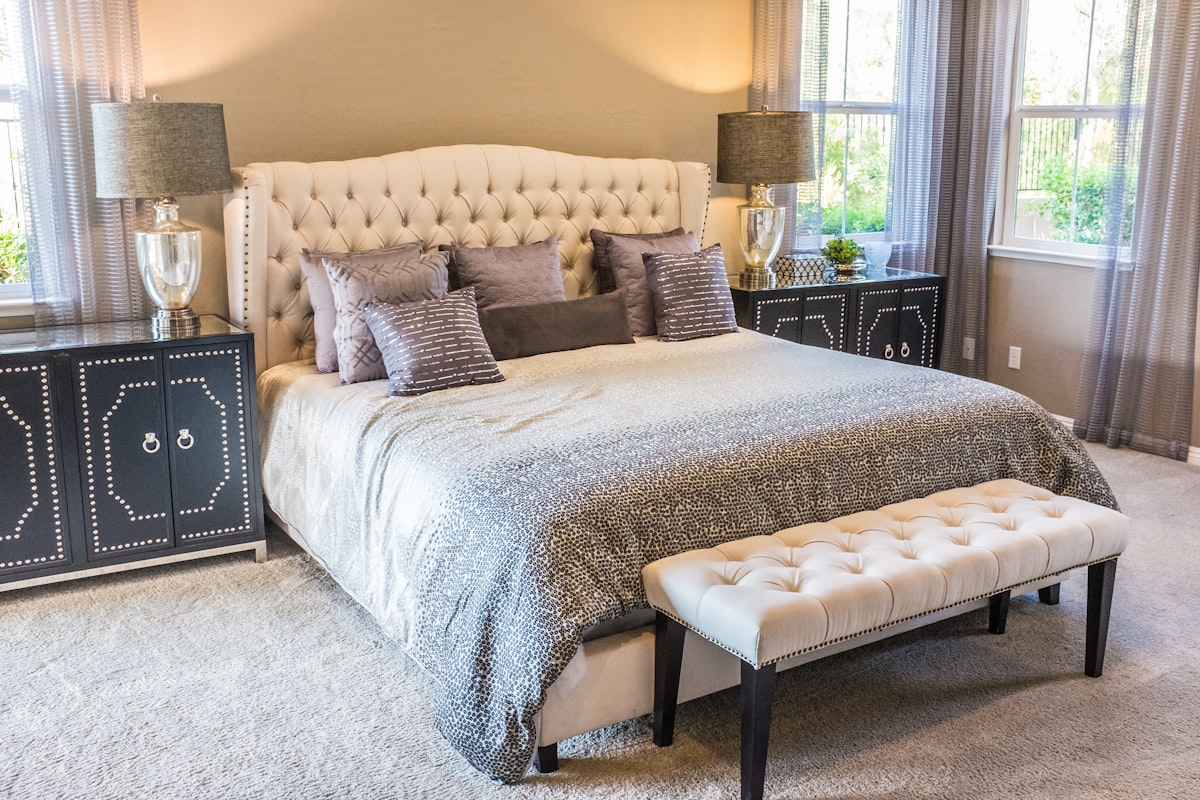
If we had to choose one piece of lighting advice, this would be it: buy more lamps. Most of the rooms we walk into have one lamp where they need three. Add a pair of table lamps to the sofa, a floor lamp behind the reading chair, and a single small lamp on a console — and the room transforms.
For more on how we approach light (and everything else), have a look at our process — or simply get in touch and we'll talk about your home.